A Glass Jar’s Next Job: Choosing a Use That Fits
Choose a second use for a glass jar by matching its opening, height and stability to what you need to store or display, without buying another container.
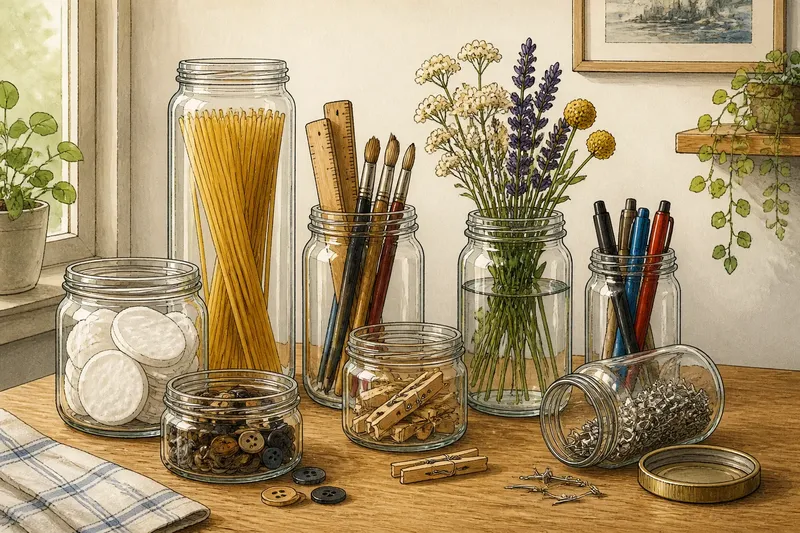
A glass jar’s next job is easier to choose when you match its shape to something that needs a home. A wide-mouth jar can welcome a hand or scoop; a narrow-necked one can hold stems or loose items that might otherwise scatter. Start with the task, then see whether the jar fits it—not the other way round.
What should you check before choosing a use?
Look at the jar as a piece of equipment, not just a transparent container. Its height, opening, base, glass thickness and any awkward ridges determine which jobs will feel convenient and which will become irritating.
- Opening: Can you put the contents in and take them out without tipping everything onto the counter?
- Height: Will the jar fit where you plan to keep it, with room to lift it out?
- Base: Does it sit steadily on the surface, or is it narrow, rounded or prone to wobbling?
- Interior: Are there shoulders, grooves or a narrow neck that could trap contents or make cleaning awkward?
- Glass and finish: Is it intact, with no chips or cracks, and can old adhesive be removed without damaging it?
- Lid: Is a lid present, clean and a good fit, or is the jar better suited to a job that stays open?
These checks help distinguish useful capacity from capacity you cannot reach. A tall jar may look generous, yet a small opening can make it inconvenient for anything that needs frequent scooping.
Clean the jar thoroughly before reusing it, including any threads or grooves around the rim. If it held a substance that is difficult to remove or you cannot identify, choose a non-food use rather than risking contact with something you will eat or drink.
Does the opening suit what you want to store?
For dry items you will handle often, a wide opening is usually the easiest to live with. It accommodates fingers, a small scoop or a funnel, and lets you see whether the contents are caught near the bottom.
Think of pasta, wooden pegs, cotton pads, spare buttons or a handful of drawing pins. The right choice depends on the item’s shape and your usual way of reaching for it. Long spaghetti, for instance, needs a tall jar with a mouth wide enough for the bundle, while tiny buttons are easy to lose in a deep, narrow container.
A narrow opening can be useful when the contents should come out in a controlled stream or when small objects need to stay gathered. It can suit a small collection of pens, craft sticks or reusable drinking straws, provided each item fits through the neck without being jammed in.
Do not treat a lid as proof that a jar is suitable for sealed storage. Ordinary reuse does not make a jar reliably airtight or suitable for preserving food. For that sort of use, follow the relevant food-safety guidance and use equipment intended for the purpose.
Which jar shape works best for different jobs?
Shape is often a better guide than apparent capacity. A squat jar with a broad mouth is easy to reach into but may take up more shelf depth; a tall, straight-sided jar uses vertical space and makes long contents easier to see.
- Wide and squat: Consider cotton pads, hair ties, small tools or a few frequently used craft supplies. Its low centre of gravity can make it comfortable on a busy surface.
- Tall and straight-sided: Consider rulers, paintbrushes, chopsticks or dried pasta. Check that the jar is stable and that the longest item does not make it top-heavy.
- Narrow-necked: Consider a small stem or a few objects that fit through the opening easily. Avoid contents that must be squeezed in or pulled out one by one.
- Curved or shouldered: Consider display items or objects that can be tipped out as a group. The change in width may make it harder to reach individual pieces at the bottom.
- Small and shallow: Consider pins, clips, beads or other tiny items, especially if the jar will sit somewhere visible. A broad mouth helps you pick through them.
Stability matters most when the jar will stand near a sink, beside a bed or on a narrow desk. A heavy jar with a broad base is less likely to tip when you reach for one item; if the glass feels precarious, choose a quieter spot or a lighter use.
Can a jar make a useful display?
Yes, if the contents benefit from being visible and do not need regular access. A jar can display smooth stones, shells collected legally from an appropriate place, or a small arrangement of dried stems, while keeping the objects gathered rather than spread across a shelf.
Match the display to the jar’s proportions. A broad, low vessel can frame a small collection of objects; a tall, narrow one can show a few stems without swallowing them. Leave enough room to remove and clean the contents, particularly if dust is likely to settle around them.
For fresh flowers, check that the glass is suitable for holding water and that the base is stable. A small opening can support stems, but it may be awkward to clean, and a narrow base can make the arrangement easy to knock over. A jar that looks attractive but is difficult to wash may be better kept dry.
It is not worth decorating a jar before you know where it will live. Paint, twine and elaborate labels can make glass harder to clean and obscure the contents. Try the plain jar first; add a removable touch only if it solves a real problem, such as distinguishing two similar containers.
What if the jar has no lid?
A missing lid does not rule out a useful second job. Open-top uses often make access quicker: a jar can gather pens on a desk, combs on a dressing table, or reusable straws in a kitchen drawer.
For dusty rooms, choose contents that can be washed or wiped, or keep the jar somewhere protected. Do not improvise a seal with a cloth or loose cover if the contents need to stay dry, child-safe or protected from pests.
If the jar has a lid but it fits loosely, treat it as a dust cover rather than a dependable closure. For small items that could spill, place the jar somewhere it will not be knocked over or use a different container with a proper, matching lid.
How do you compare storage, display and everyday access?
Ask how often you will use the contents and whether you need to see them. Frequent-use items usually benefit from an easy-to-reach opening; occasional-use items can sit in a less accessible jar, while display contents need a clear view more than a convenient scoop.
Say you have a clean, medium-height jar with a wide mouth and no lid, and you want to stop paintbrushes rolling across a desk. Put the brushes in handle-end down and check that the jar stands steadily and the bristles remain clear of the base. If the brushes lean heavily or the jar tips when you lift one, move them to a broader vessel; if they sit upright and come out easily, the jar has found a practical job.
Keep the intended contents together in your mind before filling the jar. A jumble of unrelated objects can turn a visible container into a small mystery box. If you need a label, name the contents plainly and place it where it will not hide the useful view through the glass.
Which jar works for each common need?
What kind of jar suits small craft supplies?
Choose a squat jar with a wide mouth for beads, buttons or clips, so you can see and pick out individual pieces. If the items are very small, use a lid that fits securely and keep the container away from children and pets.
Can a glass jar hold kitchen utensils?
A stable, wide-based jar can gather wooden spoons, spatulas or reusable straws, provided the items fit without making it top-heavy. Keep it away from a hob and avoid using it for utensils while the glass is hot or exposed to sudden temperature changes.
Is a narrow-necked jar useful without flowers?
It can hold a few pens, pencils or other slim items that pass easily through the opening. If you would have to pull out several objects to reach one, choose a wider jar instead.
Should a jar be used for food storage?
Only use it for food when it is clean, undamaged and appropriate for the contents and storage conditions. A reused jar is not automatically airtight or suitable for preserving; check the product instructions and follow recognised food-safety advice where needed.
When should you choose a different use?
Set the jar aside if it is chipped, cracked or too unstable for its intended place. Damaged glass can cut, and a jar that wobbles is a poor choice for a crowded counter or a home with small children or active pets.
Choose another job if cleaning would be more trouble than the benefit. A narrow-necked jar may look ideal for tiny supplies, but if you cannot reach or wash its interior properly, a wide-mouth vessel or an open tray may serve you better.
Also consider whether the contents need protection the jar cannot provide. A loose lid will not keep out damp or pests, and an open vessel will not stop dust. For electrical parts, medicines or anything with special storage requirements, use the original packaging or follow the manufacturer’s directions rather than relying on an improvised jar.
For a glass jar’s next use, the best match is the one that makes an ordinary task easier: the contents fit through the opening, the jar sits safely where you need it, and cleaning stays manageable. Keep it plain until that match proves itself in daily life, and let an awkward jar remain available for a better-fitting job instead of assigning it one out of obligation.