The Shelf Inventory That Prevents Duplicate Buys
A shelf inventory organised by cupboard and quantity makes it easier to plan a shop around supplies already at home, not hazy recollections.
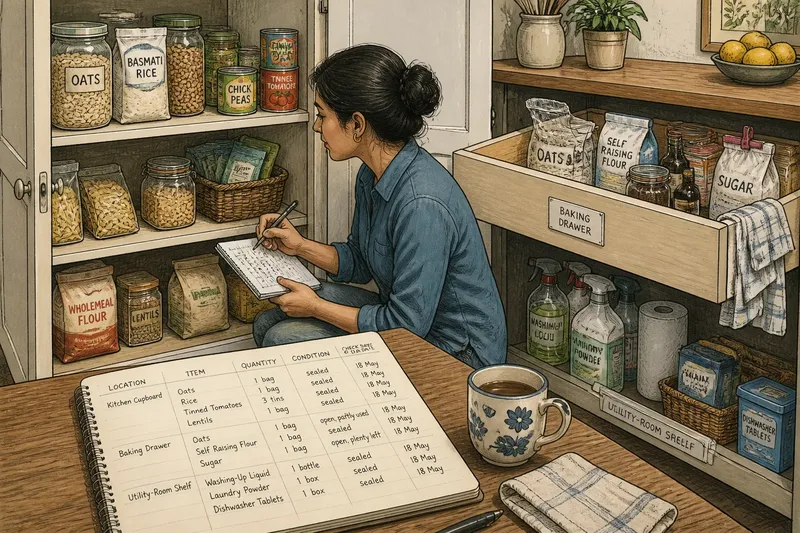
Before planning a shop, a shelf inventory can answer the nagging question: is there already another packet at home? Imagine Priya, who keeps dry goods in a kitchen cupboard, baking supplies in a drawer and spare tins on a utility-room shelf. She remembers buying oats, but not how much or where they went. Her list will work only if it captures both location and quantity.
Why did Priya’s shopping list keep missing what she had?
Priya’s usual method was to glance into the main cupboard and write down anything that looked low. It missed supplies stored elsewhere, while an open packet could make a nearly empty shelf seem stocked. The result was a list based on a quick impression rather than a useful picture of the household’s supplies.
She did not need to catalogue every object in the kitchen. She chose a narrower purpose: record the everyday food and household basics she might otherwise buy again, and make that record easy to check before a shop. The cupboard, not the product category alone, became the organising unit.
What should a location-based shelf inventory include?
Priya started with a plain notebook page for each storage place. Each entry named the item, its location and a quantity she could recognise quickly. She also noted when a packet was open, since “one oats” is less helpful if it could mean a full bag or a scattering at the bottom.
- Location: kitchen cupboard, baking drawer or utility-room shelf.
- Item: oats, rice, tinned tomatoes or washing-up liquid.
- Quantity: a count of packs, tins or bottles, or a simple description such as “one open, nearly empty”.
- Condition: open, sealed, damaged or set aside for a particular meal.
- Check date: when Priya last looked, so an old note does not masquerade as a current count.
She kept the descriptions ordinary. “Two tins” was enough; weighing each tin or estimating the exact contents of an open bag would have turned a quick household aid into a chore. For items where date, storage or use depends on the packaging, she checked the label and followed the maker’s instructions.
How did she build the inventory without emptying every cupboard?
Priya worked one storage place at a time, beginning with the cupboard she opened most often. She looked from front to back, grouped like items long enough to count them, and wrote the location at the top of the page before recording anything. Then she moved to the baking drawer and utility-room shelf, adding a separate heading for each.
She did not reorganise the whole kitchen as she went. That would have mixed two jobs and made it harder to tell whether the inventory was helping. Instead, she returned each item to its usual place and made a brief note if a supply lived somewhere unexpected.
Say Priya finds one sealed bag of oats at the back of the kitchen cupboard and an open bag in the baking drawer. She records “kitchen cupboard: one sealed” and “baking drawer: one open, partly used”. Before adding oats to her next shopping list, she can see that the household has both a reserve and an in-use packet; the observable result is a more informed decision, not an automatic instruction to buy or not buy.
How can the inventory guide the next shop?
Before shopping, Priya reads the list alongside the meals and household needs she has already planned. She checks entries that could have changed since the last look, especially open packets and supplies stored in places she visits less often. If a note is unclear, she checks the shelf rather than guessing.
That distinction matters: the inventory describes what is present, while the shopping list describes what is needed. A full packet may still be earmarked for a recipe, and several tins may not suit the meals planned. Priya uses the location record to avoid overlooking supplies, then makes the decision in light of how she expects to use them.
She also leaves room for ordinary household variation. If someone moves a packet or uses the last of a staple, the paper list may briefly lag behind reality. A quick check before shopping is more useful than treating the page as a live record that must be updated after every use.
What should Priya do when the cupboard changes?
After a shop, Priya updates only the entries that changed: a new item, a used-up supply or a packet moved to another location. She crosses out obsolete notes rather than copying the entire inventory again. When she notices a mismatch at the next check, she corrects it then.
Her useful habit is attaching the list to the place where the decision happens. She keeps the notebook near the household shopping list, not tucked behind the supplies themselves, where it might be forgotten. A phone note would also suit someone who usually plans errands on a phone, provided the location names remain clear.
What is not worth the effort? A detailed count of every pinch of salt, every condiment and every rarely used ingredient. Priya keeps the inventory focused on supplies that are easy to buy twice or that matter to her coming plans. If an item rarely affects a shopping decision, she lets it stay off the page.
Which shelf-inventory questions come up before shopping?
Should the inventory cover every cupboard?
No. Priya began with the places holding supplies she commonly buys and forgets, then added another location only when it solved a real blind spot. A short, dependable list is easier to check than an exhaustive one she stops maintaining.
How should open packets be counted?
Use a description that helps you decide, such as “open, plenty left” or “open, nearly empty”. Exact weighing is unnecessary unless a particular recipe or household need makes it useful.
How often should the shelf inventory be checked?
Check it when planning a shop, and refresh entries that may have changed since the previous visit. If shopping is irregular, a quick look at the relevant shelves matters more than following a fixed calendar.
What if two household members use the same supplies?
Keep the location names consistent and make the list easy for both people to find. If they shop separately, agree on a simple way to mark a supply that has just been bought or used, so neither person relies on a stale note.
What did Priya’s small system change?
Priya did not create a perfect record of everything in her home. She made it easier to connect a shopping decision to the shelf where a supply actually sits. The useful lesson from her shelf inventory is to record enough location and quantity detail to resolve doubt, while keeping the check light enough to repeat.
When Priya plans her next shop, she can scan “kitchen cupboard”, “baking drawer” and “utility-room shelf” before writing the list. That small pause turns a vague memory into a checkable household picture—and leaves her free to buy what her plans genuinely call for.